The Rise of the Indian Economy
The Rise of the Indian Economy: A 21st Century Transformation
India's economic journey in the 21st century stands as one of the most compelling transformations in modern history. From a developing economy characterized by bureaucratic inefficiencies and a heavy dependence on agriculture, India has rapidly emerged as a global powerhouse. This article explores the factors driving the rise of the Indian economy, its achievements, challenges, and the road ahead.
Historical Context and Liberalization
India gained independence in 1947 with a vision of self-reliance and state-led development. The Nehruvian model emphasized public sector enterprises and import substitution. While this strategy led to the development of a strong industrial base, it also resulted in a rigid, over-regulated economy often referred to as the "License Raj."
By the late 1980s, inefficiencies, rising fiscal deficits, and a balance-of-payments crisis forced India to reconsider its economic strategy. In 1991, under the leadership of then-Prime Minister P.V. Narasimha Rao and Finance Minister Dr. Manmohan Singh, India initiated landmark economic reforms. These included liberalization, privatization, and globalization (LPG). Tariff reductions, deregulation, foreign direct investment (FDI) liberalization, and currency devaluation laid the foundation for India’s economic resurgence.
These reforms unlocked the entrepreneurial potential of the Indian private sector. Companies that once struggled under state control began to thrive in a more open, competitive environment. The shift also encouraged integration with global markets, which exposed Indian firms to international best practices and innovations.

Growth Trajectory Since 2000
From 2000 onwards, India’s GDP growth accelerated significantly. Between 2003 and 2008, the economy grew at an average annual rate of around 8.8%. Despite the global financial crisis of 2008, India demonstrated resilience, with growth rebounding quickly thanks to strong domestic consumption and proactive fiscal and monetary policies.
India emerged as the world’s fastest-growing major economy by the mid-2010s. By 2023, India had become the fifth-largest economy in the world in nominal GDP terms, surpassing the United Kingdom. In purchasing power parity (PPP) terms, India ranks third globally, underscoring the substantial size of its economy.
Key growth drivers include:
-
Demographic dividend: With a median age of around 28, India boasts a young and growing workforce that can drive productivity and innovation for decades to come.
-
Technology and services: India has become a global IT and software services hub, led by firms like Infosys, TCS, and Wipro. These firms have not only earned foreign exchange but also created millions of direct and indirect jobs.
-
Urbanization: Rapid urban development has expanded markets and created new economic opportunities. Cities like Bengaluru, Hyderabad, Pune, and Gurugram have become tech and startup hubs.
-
Reforms and governance: Initiatives such as GST, Insolvency and Bankruptcy Code, Digital India, and financial inclusion programs have improved transparency and the ease of doing business.
Key Sectors Driving Growth
-
Information Technology (IT):
-
Contributing around 8% to GDP, the IT sector has been a major engine of growth, exports, and employment.
-
India is the back-office of the world, with a dominant position in software services and business process outsourcing (BPO).
-
The sector also leads in emerging areas like artificial intelligence, cloud computing, and cybersecurity.
-
-
Pharmaceuticals:
-
Known as the "pharmacy of the world," India is a leading producer of generic drugs.
-
The sector played a crucial role during the COVID-19 pandemic, supplying vaccines and medicines globally.
-
The growth of biotechnology and clinical research further strengthens India’s position in the global health ecosystem.
-
-
Manufacturing:
-
Government initiatives like "Make in India" aim to boost manufacturing's share in GDP and employment.
-
Sectors like automobiles, textiles, chemicals, and electronics are seeing increased investment.
-
Emerging areas such as defense manufacturing, electric vehicles, and green technology present new opportunities.
-
-
Agriculture and Agri-tech:
-
Although its GDP share is declining, agriculture still employs nearly half the population.
-
Agri-tech startups and reforms are modernizing the sector, enhancing productivity, and improving farmer incomes.
-
Cold chain logistics, precision farming, and digital marketplaces are being scaled up across the country.
-
-
Financial Services and Fintech:
-
India’s digital payments revolution, led by UPI, has transformed the financial landscape.
-
Fintech startups are expanding access to banking, credit, and insurance, especially in rural and semi-urban areas.
-
Regulatory sandboxes and supportive policies are nurturing innovation in this sector.
Infrastructure and Connectivity
Infrastructure development has been a cornerstone of India’s economic rise. Major investments in roads, railways, ports, and digital infrastructure have facilitated economic integration. Programs like Bharatmala (roads), Sagarmala (ports), and UDAN (regional air connectivity) are enhancing connectivity.
India has also made significant strides in digital infrastructure. The Aadhaar biometric ID system, JAM Trinity (Jan Dhan-Aadhaar-Mobile), and 5G rollout are enabling efficient service delivery and financial inclusion. The expansion of fiber optic networks and smart cities is accelerating digital transformation across regions.
Public-private partnerships (PPPs) have played a significant role in financing and executing infrastructure projects. Smart infrastructure, green buildings, and integrated transport systems are becoming central to urban planning.
Foreign Investment and Global Integration
India has become an attractive destination for FDI, receiving over $85 billion in inflows in FY 2021-22. Favorable demographics, a large domestic market, and improved ease of doing business rankings have contributed to investor confidence. Policies like automatic FDI routes, single-window clearances, and industrial corridors are drawing global capital.
India is also actively engaging in trade negotiations and global supply chains. Amid global shifts post-COVID-19 and geopolitical tensions, India is positioning itself as an alternative manufacturing base to China. Trade partnerships with the US, EU, UAE, and ASEAN are being strengthened.
India’s services exports, particularly in software and consulting, remain robust. The country is also enhancing its logistics and warehousing capabilities to support its export ambitions.

Social and Economic Challenges
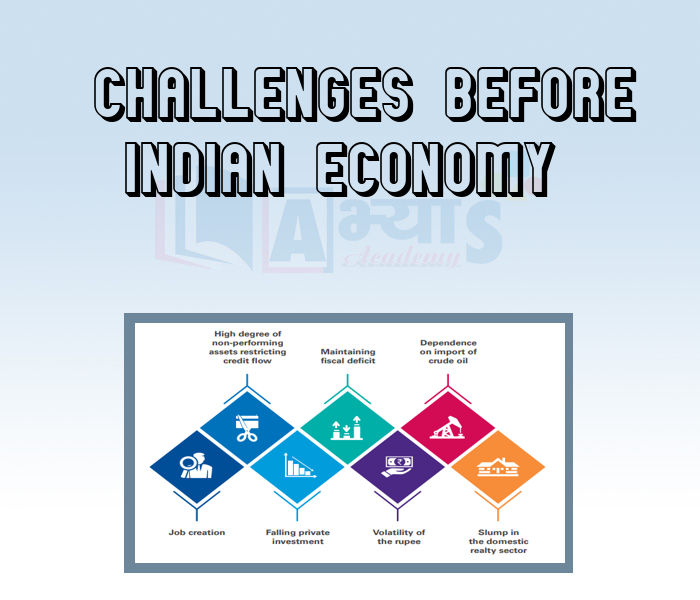
Despite progress, India faces several pressing challenges:
-
Inequality: Economic growth has not been evenly distributed. Income and regional disparities persist. Urban-rural divides and social inequities need targeted policy responses.
-
Unemployment: Especially among the youth and educated segments. The informal sector remains large and underproductive.
-
Environmental degradation: Rapid industrialization and urbanization are straining natural resources, causing air and water pollution, deforestation, and loss of biodiversity.
-
Education and health: Quality of education and healthcare access remains inconsistent across regions. There is a pressing need for investment in public health infrastructure and skill development.
-
Regulatory hurdles: Bureaucratic red tape, slow judicial processes, and complex land and labor laws continue to deter investment.
Recent Reforms and Policy Initiatives
The Indian government has launched a series of reforms to sustain and accelerate growth:
-
Atmanirbhar Bharat (Self-Reliant India): Aimed at strengthening domestic capabilities across sectors, boosting MSMEs, and reducing dependence on imports.
-
PLI Schemes (Production Linked Incentives): Targeted support for manufacturing in key sectors like electronics, pharmaceuticals, solar energy, and automotive.
-
Startup India and Skill India: Fostering entrepreneurship and skill development, particularly among youth. India now hosts over 100 unicorns.
-
Labour and agricultural reforms: Seeking to modernize and deregulate key sectors, although some have faced resistance and require broader consensus-building.
In addition, the National Education Policy (NEP 2020) aims to overhaul India’s education system to make it more flexible, holistic, and skill-oriented.
India's Green and Digital Future
India is balancing growth with sustainability. The country is a global leader in renewable energy expansion, particularly solar and wind. India has committed to achieving net-zero emissions by 2070 and is investing in green hydrogen, electric mobility, and energy storage technologies.
Digital transformation is also a key pillar of future growth. The widespread adoption of digital services in governance, education, health, and commerce is transforming the socio-economic landscape. India Stack, ONDC (Open Network for Digital Commerce), and CoWIN have demonstrated the scalability of digital public infrastructure.
Emerging technologies such as AI, blockchain, and quantum computing are being integrated into governance and industry, positioning India at the forefront of the Fourth Industrial Revolution.

Global Influence and Soft Power
India’s rising economic clout is matched by its growing global influence. It plays an increasingly prominent role in global forums like G20, BRICS, and the Quad. India hosted the G20 Summit in 2023, where it championed inclusive growth, digital innovation, and sustainable development.
India’s diaspora, one of the largest in the world, contributes significantly through remittances, investments, and knowledge transfer. Cultural exports like yoga, Bollywood, cuisine, and literature enhance India’s soft power.
Additionally, India’s leadership in space missions, such as Chandrayaan and Gaganyaan, and contributions to global health (e.g., vaccine diplomacy) underline its capabilities in science and humanitarian outreach.
Conclusion: The Road Ahead
India's economic rise in the 21st century is a testament to its resilience, innovation, and reform-minded governance. As it aspires to become a $5 trillion economy and beyond, India must address structural challenges while leveraging its demographic and technological strengths.
The path forward requires a focus on inclusive and sustainable development. Investments in human capital, climate resilience, innovation, and governance reforms will be crucial. By embracing openness, collaboration, and sustainability, India is poised to play a pivotal role in shaping the global economic order in the decades to come.
With continued reform momentum and strategic vision, the Indian economy is not just rising—it is transforming into a model of dynamic, inclusive, and responsible growth for the 21st century.


Comments
Post a Comment