The effect of restriction on foreign students on US economy
Introduction
The United States has long been a premier destination for international students, attracting over a million learners annually who contribute significantly to the nation's economy and cultural diversity. However, recent policy shifts under the Trump administration have introduced stringent restrictions on foreign student visas, raising concerns about the potential economic repercussions.
The Policy Landscape
In early 2025, the Trump administration implemented a series of measures aimed at tightening immigration controls, with a particular focus on international students. Key actions included:
-
Halting Student Visa Interviews: A global freeze on new student visa interview appointments disrupted the flow of international students to the U.S.
-
Revoking Visas for Chinese Students: Citing national security concerns, the administration revoked visas for numerous Chinese students, particularly those in STEM fields.
-
Enhanced Social Media Scrutiny: The administration expanded social media screenings for visa applicants, targeting those suspected of harboring anti-Semitic sentiments or supporting designated foreign terrorist organizations.
-
Executive Order 14188: Signed in January 2025, this order mandated federal agencies to combat anti-Semitism, with a focus on monitoring "alien students and staff" for related activities.
These policies have created an atmosphere of uncertainty and apprehension among prospective international students, leading many to reconsider their plans to study in the U.S.
Economic Contributions of International Students
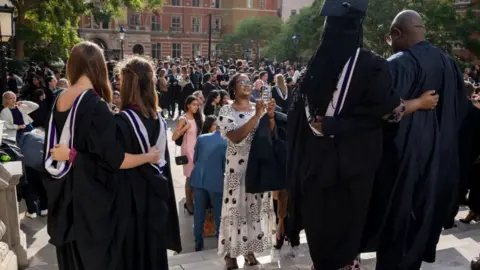
International students are a vital component of the U.S. economy. In the 2023-2024 academic year, they contributed approximately $50 billion to the U.S. economy.
States like Illinois and Louisiana have felt the immediate impact of these policy changes. Illinois, hosting about 5.5% of international students, faces a potential $2 billion economic risk due to the visa restrictions. Louisiana's universities, with nearly 7,000 international students, risk losing an estimated $264.8 million.
Impact on Higher Education Institutions
U.S. universities rely heavily on international students, not only for tuition revenue but also for the diverse perspectives they bring to campuses. The recent visa restrictions have led to:
-
Decreased Enrollment: A significant drop in applications from international students, particularly from countries like China and India.
-
Financial Strain: Loss of tuition revenue has forced some institutions to reconsider budgets and cut programs.
-
Research Implications: International students, especially in STEM fields, contribute substantially to research output. Their absence could hinder innovation and research advancements.
Broader Economic Implications
The restrictions on international students have ripple effects beyond academia:
-
Labor Market: Many international students transition into the U.S. workforce, filling critical roles in various industries. Their reduced presence could exacerbate skill shortages.
-
Innovation and Entrepreneurship: International students have historically contributed to startups and technological advancements. Limiting their numbers may stifle innovation.
-
Global Competitiveness: As students opt for countries with more welcoming policies, the U.S. risks losing its edge as a global education leader.
International Perception and Alternatives
The U.S.'s stringent visa policies have led many prospective students to consider alternative destinations. Countries like Canada, Australia, and Germany have seen increased interest due to their more accommodating immigration policies. A survey indicated that 42% of international students are now unlikely to consider the U.S. for higher education.
Case Studies: University-Level Impact
New York University (NYU) and University of Southern California (USC) consistently rank among the top U.S. institutions with the largest international student populations. NYU alone enrolled over 21,000 international students in recent years — nearly 25% of its entire student body. With the new visa restrictions, NYU administrators have reported a 15–20% drop in new international applications for Fall 2025.
According to Dr. Samantha Lin, Associate Dean of Global Affairs at NYU:
"We’ve seen bright students from China, India, and Iran either get stuck in administrative backlogs or have their visas denied entirely, often without a clear explanation. This is hurting our academic and cultural ecosystem."
The situation is similar at the University of California, Berkeley, where a significant portion of graduate engineering and computer science students come from abroad. A Berkeley economics professor estimated a potential $30 million loss in tuition revenue and reduced lab productivity if restrictions persist.
Smaller institutions and community colleges are also feeling the squeeze. Unlike elite universities with large endowments, regional colleges in states like Iowa, Kansas, and Mississippi often depend on international students to maintain enrollment numbers and fund programs that otherwise wouldn’t exist.
U.S. Soft Power and Geopolitical Standing
Beyond immediate economic losses, these restrictions threaten the long-term soft power of the United States. For decades, American universities have served as incubators for global leaders — from tech entrepreneurs to heads of state.
Former Google CEO Sundar Pichai, an international student from India, is a classic example. Similarly, many international alumni from U.S. institutions return home and promote American democratic values, economic practices, and innovation culture. Curtailing their access now not only affects enrollment but may diminish America’s global influence.
A Brookings Institution report in early 2025 emphasized that:
"International students are some of the U.S.’s most effective ambassadors. Alienating them is a geopolitical error with lasting consequences."
This global sentiment is being capitalized on by other countries. For example, Canada is fast-tracking visas for international students and even offering permanent residency options upon graduation. As a result, Canadian institutions like the University of Toronto and McGill University are reporting record applications from students who would traditionally choose the U.S.
Comparative Analysis: Global Student Migration Trends
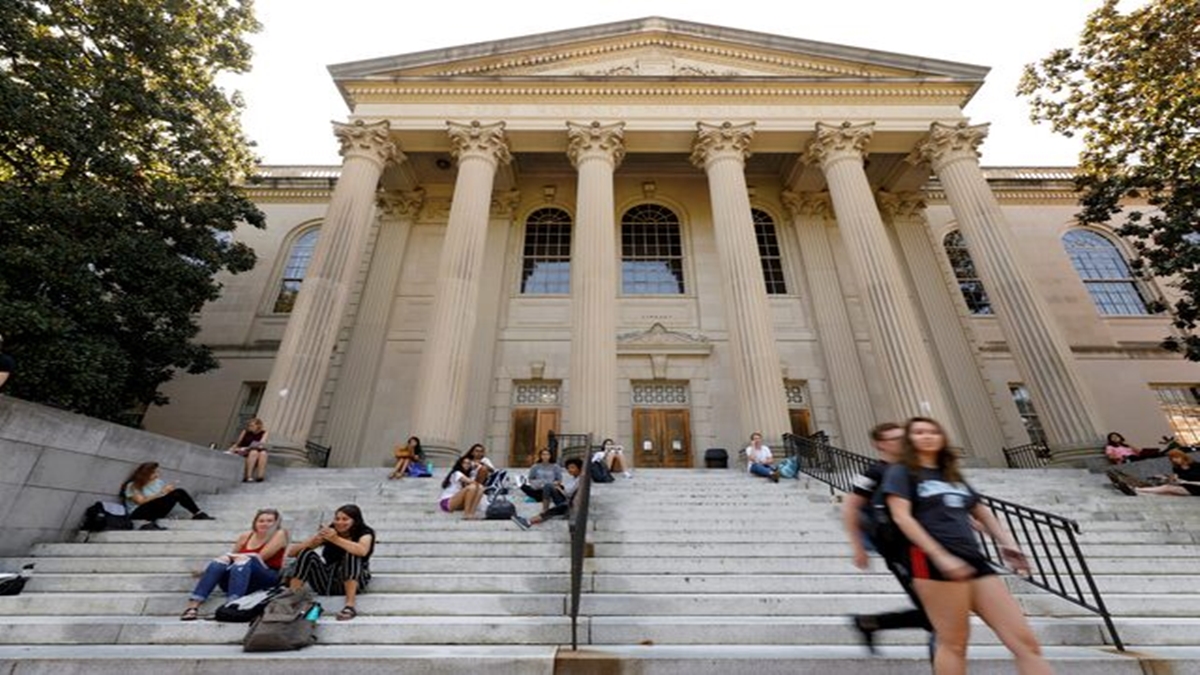
Canada has become the biggest winner of U.S. visa crackdowns. With its Global Skills Strategy and Post-Graduation Work Permit (PGWP), it offers international students a clear path to permanent residency. In 2024 alone, Canada welcomed over 800,000 international students — a 23% increase from the previous year.
The United Kingdom introduced a Graduate Route Visa in 2021, allowing international students to stay for two years post-graduation (three for PhDs). As of 2025, UK universities report a 30% surge in international applications, especially from Southeast Asia and Latin America.
Australia has similarly eased visa restrictions and increased funding for student welfare and housing. Institutions like the University of Melbourne and Australian National University are increasingly preferred by students from India and Malaysia, who are growing wary of U.S. entry barriers.
In contrast, international student numbers in the U.S. have stagnated or declined for the third consecutive year, threatening the country’s leadership position in global higher education.
Student Voices: Real-World Fallout
Numerous students have shared their struggles navigating the new system.
Liang Zhou, a graduate student from Shanghai who was accepted into a PhD program in physics at Stanford, had his visa revoked abruptly.
“I had a full scholarship and planned to start cutting-edge quantum computing research. I’m now forced to defer indefinitely, with no guarantee the situation will improve.”
Aarushi Mehta, an Indian undergraduate admitted to Georgia Tech, said her interview was canceled three times and her documentation subjected to invasive scrutiny:
“They asked about social media posts from five years ago, including a comment I made criticizing a political leader. I felt criminalized for having an opinion.”
These stories are not isolated. Education consultancies report that many prospective students are choosing to postpone or cancel their U.S. education plans entirely.
The Long-Term Economic Cost
A 2025 economic analysis by Moody’s Analytics estimates that a 25% decline in international student enrollment could lead to:
-
$11 billion in lost tuition revenue
-
$15 billion in lost local economic activity, including housing, food, transportation, and retail
-
Job losses in education, hospitality, and services, especially in university towns
In addition, international students contribute disproportionately to STEM research and innovation. According to the National Science Foundation, over 50% of U.S. graduate students in engineering and computer science are international. Fewer students mean fewer research breakthroughs, slower tech development, and lower patent output.
Economist Dr. Laura Cheng summarizes it succinctly:
“Restricting international students is like blocking venture capital from the economy. You're cutting off future growth at the source.”
Historical Precedents: Lessons from the Past
The current situation is reminiscent of post-9/11 visa tightening, when national security concerns led to a drop in student visas, particularly from Muslim-majority countries. It took nearly a decade for international student numbers to recover fully.
During the COVID-19 pandemic, the Trump administration also attempted to force international students to leave the U.S. if their classes moved online — a policy that was ultimately reversed due to legal challenges and backlash from institutions like Harvard and MIT.
These precedents show that restrictive policies have long-term effects, often outlasting the administration that enacts them.
What Can Be Done?
Several policy recommendations have emerged to mitigate the fallout:
-
Streamline the visa process: Reduce unnecessary bureaucracy and delays by increasing staffing at embassies and consulates.
-
Rebuild trust: Launch global education diplomacy efforts to signal that the U.S. remains open to international talent.
-
Improve pathways to residency: Create transparent immigration options for high-skilled graduates to stay and work in the U.S.
-
Decouple education from political battles: Avoid using student visas as tools in broader geopolitical conflicts.
-
Invest in university resilience: Provide emergency funding for institutions most impacted by enrollment drops.
Conclusion
The Trump administration’s restrictions on international students are already causing measurable harm to the U.S. economy, higher education system, and global reputation. What began as a policy aimed at national security and cultural control has cascaded into a broader economic and diplomatic liability.
If left unaddressed, these measures could signal a long-term decline in America’s role as a beacon for global talent. Reversing this trend requires urgent action, both from policymakers and academic institutions.
In a global economy increasingly driven by knowledge, innovation, and cultural exchange, the U.S. can ill afford to close its doors to the world’s brightest minds.


Comments
Post a Comment